Saturday, July 20, 2013
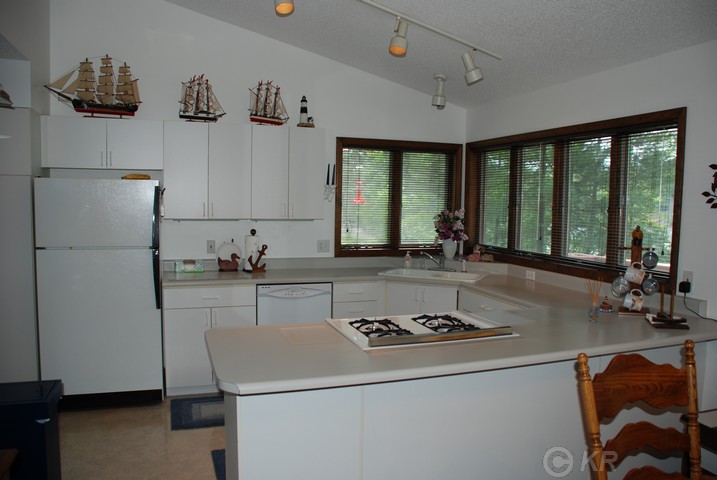
1664 Cumberland Circle, Gladwin MI - SOLD!
Friday, July 19, 2013
5329 Winchester Way, Gladwin MI - SOLD!
Thursday, July 18, 2013
5641 Lakeside Drive, Gladwin MI - SOLD!
80 or 40 Acres Stockwell Road, Harrison MI SOLD!
Wednesday, July 17, 2013
3729 West Branch Dr, Gladwin MI - SOLD!
Monday, July 15, 2013
Retirement Without a Mortgage
Planning for retirement is obviously important and many times, an activity plagued by procrastination. Some people plan to have their home paid for by that magical date so they won’t have payments after they retire. It makes sense to eliminate a large recurring expense before they quit working.
One strategy would be to be make regular principal contributions in addition to the payments so that it will eliminate the debt by the target retirement date.
Let’s say that a homeowner refinanced their $200,000 mortgage at 4% last year with the first payment due on May 1, 2012. Under normal amortization, the home would be paid for at the end of the term; 30 years in this example.
By making additional principal contributions with each payment, it would accelerate the payoff on the home. An extra $250.00 a month would pay off the mortgage in 10 years. $524.55 extra with each payment would pay off the loan in 15 years; and $796.23 would pay off the loan in 12 years.
Having a home paid for at retirement has the obvious benefit of no house payment. It is also a substantial asset that could be borrowed against or sold if unanticipated events should occur.
Another strategy might involve purchasing a smaller home now to use as a rental that you intend to live when you retire; see Retirement Home Now.
To make some projections to pay off your own mortgage, use this Equity Accelerator.
The Return of the 10 Percent Down Payment - Yahoo! Homes
Remember the 10 percent down payment on a house? After virtually disappearing for years, it's back.
Around the country, some lenders are offering 90 percent financing again on all loan types. For example, San Francisco-based RPM Mortgage resumed offering "piggyback" loans in the first quarter of 2013 after discontinuing them during the height of the credit crisis in late 2007, according to Vice President Julian Hebron. (A piggyback loan enables a home buyer to put only 10 percent down without having to buy mortgage insurance. This is done by getting two loans totaling 90 percent.)
* Click on the Link Above to Real Article...
Tuesday, July 09, 2013
First Person: We're Paying Off Our Home in Half the Time - Yahoo! Homes
My husband and I took out a 30-year mortgage in 2005. Our goal was to pay off our mortgage in half the time. Looking back, it would have been easier to force ourselves into paying our home off early with a 15-year mortgage. However, we are still committed to our goal of paying off our home in half the time.
Read more by clicking on the above link...
Monday, July 08, 2013
When Rates Go Up
Rising interest rates are great if you are renewing a certificate of deposit but not so much when you’re borrowing money. With interest rates on the rise as well as home prices, housing affordability is a concern for would-be homeowners.
A rough rule of thumb is that a person’s or family’s housing should not exceed 28% of their monthly gross income. While rental rates and home prices have been consistently increasing, mortgage rates have been soaring in the past month. In one week, according to the Freddie Mac Primary Mortgage Market Survey, they jumped by .5%.
This means that people have to pay a larger percentage of their income for housing unless their incomes have been increasing at an equal pace. A $200,000 mortgage would be over $100 more per month if closed in July compared to closing at the interest rates available in January of 2013.
If rates increase by .5% by the time you close on the same size mortgage, payments would increase by almost $60 per month. In order to keep the payments the same, a borrower would have to put an additional $11,000 down to lower the mortgage amount.
Check out how your payment would be affected if interest rates continue to rise.
The National Association of REALTORS® suggests that housing is more affordable now than one year ago. However, with all of the variables in play including inflation that was not addressed in this piece, it is unclear how long conditions will remain “affordable”.
Monday, July 01, 2013
FHA & VA Assumptions
Not many buyers have assumed a mortgage in the past 25 years. Most people think it was because FHA and VA in the late 80’s began to require that buyers qualify for the assumptions. Not having to qualify for a mortgage would certainly benefit certain buyers.
If a homeowner must qualify for an assumption like a new loan, they'll generally choose the mortgage with the lower interest rate. Over the past 25 years, rates have been trending down but it appears that rates have bottomed out and will gradually increase. As they continue to rise, the lower rates on the FHA and VA loans created in the last few years will appeal to buyers even if they do have to qualify for the assumption.
There are significant advantages to assuming one of these government insured mortgages if the current interest rate on a new loan is higher:
1. Mortgage is further into amortization schedule
2. Lower interest rate loans amortize faster than higher interest rate loans
3. Lower closing costs than a new mortgage
4. Easier to qualify than on a new mortgage
5. No appraisal required
FHA assumptions are only allowed as owner-occupied residents. The borrower must meet current FHA guidelines for borrowers. The total debt ratio including house payment to be assumed cannot exceed 41% of borrowers’ monthly gross income.
VA loans are also assumable with buyer qualification. However, in order for the veteran Seller to have their eligibility reinstated, the buyer must also be a veteran with eligibility.
A 1% difference in the current rates and a lower assumable mortgage rate begins to make it very attractive to assume a mortgage. When the differential becomes even greater, assumptions will become more prevalent than they’ve been in over twenty years.
Monday, June 24, 2013
Debt Relief = Income
Many times a homeowner might feel relieved being out from under the obligation of a mortgage they can’t afford even though the property was lost due to foreclosure or short sale. If a lender cancels or forgives debt, a taxpayer must include the cancelled amount in their income for tax purposes depending on the circumstances. The tax significance could be serious.
Congress enacted the Mortgage Relief Act specifically to help homeowners who might be affected in the housing crisis that started approximately in 2007. The Act expired on 12/31/12 but was temporarily extended by Congress until December 31, 2013.
This relief only applies to a taxpayers’ principal residence which does not include second homes and investment property. The maximum amount is limited to $2 million of mortgage debt forgiveness or $1 million if filing separately.
Another provision is that the debt relief is limited to acquisition indebtedness used to buy, build or improve the property. It excludes cash equity loans whether made separately or in a refinance of the original mortgage.
Due to the serious consequences involved in short sales and foreclosures, it is advised that homeowners faced with this possibility should seek expert advice from their legal and tax professionals.
Saturday, June 22, 2013
100 Acres Woods Road, Clare County - SOLD!
Monday, June 17, 2013
Serious Buyer
1. Remove the uncertainty that you may not be approved for a mortgage by having a pre-approval letter from your mortgage company.Offer a fair price for the property in your initial purchase agreement. It shows sincerity and good faith that you’re actually trying to purchase the home and not trying to take advantage of the seller. The old adage that you can always go up later may never happen if there are multiple offers on the property in the beginning.
2. Show your sincerity by increasing the normal amount of earnest money customary for the area and price of the home. The earnest money will be applied toward your down payment and closing costs. Consider placing even more money in escrow when the contingencies have been met.
3. Specify a closing date in the contract but acknowledge that you can be flexible to accommodate the sellers moving date. If it becomes an issue, it still must be mutually agreed upon.
4. Make the contingency periods shorter if possible to make the seller feel that they’ll know sooner that the offer is solid.
5. If the contingency really isn’t important to you, leave it out of the offer. The more contingencies included in a contract, the more the seller will feel might happen to keep it from actually closing.
6. Write a personal note to the seller explaining why you like and want their home. Consider including a picture of your family and pets.
7. Physically sign the offer with a felt tip pen of contrasting color. You’d be surprised how this adds a personal touch to the offer.
Sunday, June 09, 2013
Renters Want to Buy
Fannie Mae, in a recently released study, states that consumer attitudes continue to be favorable about homeownership, particularly with the younger generations, ages 18 to 34. Slightly over half of them think that owning makes more sense than renting when comparing the financial and lifestyle benefits.
90% of aspiring owners expect to purchase a home someday and slightly over half think they’ll do it within five years. The primary challenges are having sufficient savings and the difficulty of getting a mortgage today. Younger renters see renting as a temporary stepping stone toward homeownership.
Homeowners are far more likely than renters to be “very positive” about their housing experience. Some of the benefits identified are:
• Having control over what you do with your living space
• Having a sense of privacy and security
• Having a good place for your family or to raise your children
• Having the best investment plan
• Living in a nicer home
• Building up wealth
• Saving for retirement
• Living in a place where you and your family feel safe
• Feeling engaged in your community
To satisfy a buyer’s doubts about qualifying for a mortgage, make an appointment with a trusted mortgage professional. If you’d like a recommendation at no cost or obligation, please contact me at iviebaker@kehoerealty.com. Check out this Rent vs. Own to see the real cost of owning a home.
For more information about the Fannie Mae survey in presentation form, Click Here.
Monday, June 03, 2013
What's It Worth?
How much is a one carat diamond worth? Anyone who has shopped for one knows that the price could have a significantly wide range of value. It's been said that purchasers should consider the color, cut, clarity and carat size to compare stones but when it gets down to decision time, buyers still want to know “how much is it worth?”
Real estate valuation can be equally as confusing to the public. There are three commonly used tools that today’s home buyers rely on to make decisions but they vary significantly in the methods used to make the determination as well as the possible final consideration.
Appraisals are an opinion or estimate of value based on specific guidelines made by individuals who are licensed and possibly certified. Buyers and sellers may be reluctant to engage an appraiser because there is a fee of several hundred dollars that must be paid in advance even if no sale is ever consummated.
A Broker’s Price Opinion (BPO) as defined by the National Association of REALTORS® is an “estimate of the probable selling price of a property.” The Dodd-Frank Act describes a BPO as “an estimate…that details the probably selling price of a particular piece of real estate property and provides a varying level of detail about the property’s condition, market, and neighborhood, and information on comparable sales, but does not include an automated valuation model.”
A Comparative Market Analysis (CMA) is a commonly used tool of salespeople to provide information to buyers and sellers to facilitate a sale. In most cases, it would be difficult to distinguish a CMA from a BPO because the steps considered are essentially the same and practitioners commonly use the terms interchangeably.
Another method called Automated Value Model (AVM) use software to search available data on the Internet to arrive at an approximation of value. Zestimates found on the Zillow site use this method. AVM’s may not consider all the market activity such as MLS sales and active listings. They can’t make adjustments based on human experience and market knowledge.
For what it’s worth, a buyer or seller might want to acquire as much current and factual information as possible from a trusted real estate professional familiar with the market before making a decision on the largest single asset most people acquire.
Monday, May 27, 2013
Will the "Good Life" Be Ready When You Are?
The Life of Riley was a TV show from the 50’s starring William Bendix but the title’s origin came from an expression meaning that a person was living the “good life.” Most people envision themselves living the good life by retirement but don’t really have a plan to get there.
There’s a rough rule of thumb used to estimate how much net worth a person would need by the time they retire to generate a certain income. The target annual income is divided by a safe, conservative yield to determine the investable assets needed.
A person who wanted $100,000 annual income generated from a 5% investment would need investable assets of $2,000,000. If a person had $500,000 now, they would need to accumulate $1.5 million more by the time they retire. If it was estimated to be 15 years away, they would need to save about $100,000 a year, each year until retirement.
It is a sobering example that could be depressing without a plan. It might be easy to say, “I should have started sooner” which may be true but there is still hope.
Gradually, over the next several years, accumulate rental property and allow the tenant to retire the debt for you. The equity in each property will grow from the amortization of the loan each time a payment is made. It also grows as the property increases in value due to appreciation.
Single family homes as rentals offer the investor an opportunity to meet their retirement and financial goals for the following reasons:
- The ability to borrow large loan-to-value mortgages
- At fixed interest rates
- For long terms (easily up to 30 years)
- On appreciating assets
- With significant tax advantages
- And reasonable control not offered by alternative investments.
Monday, May 20, 2013
Breathe Easy
The benefits of regularly changing the heating and air-conditioning filters are obvious to homeowners; the real challenge is creating a system to make sure it gets done.
A reasonable schedule would be to replace it with a new one-inch pleated filter every 60-90 days. Households with shedding pets should consider replacing them every month. Some people change their filters every month when they pay their electric bills. A simple system would be to set a recurring appointment on your calendar like Outlook or Google.
Filters trap dust, mold and bacteria which can directly affect the air quality and play havoc with your allergies. When a filter is dirty, it prevents proper airflow and allows dust, dirt and allergens to blow through your home. Changing your filter regularly helps to avoid maintenance, improves equipment life and produces increased energy savings.
When shopping for filters, it’s understandable to look for the best bargain but the cheapest price may not be the best choice. When purchasing, recognize that HEPA-rated and HEPA-type filters are not the same thing. HEPA stands for high-efficiency particulate air. A HEPA filter meets or exceeds standards for efficiency set by the U.S. Department of Energy. Most HVAC contractors recommend HEPA filters.
Some filters need to be changed monthly and other types have manufacturer recommendations of every three months. An alternative to disposable filters are the permanent, washable types. These will cost more initially but because you can clean them and re-use them, eventually, you’ll recapture the cost and realize savings.
Monday, May 13, 2013
Whose Commission Is It?
One of the most common reasons buyers want to deal directly with the seller is because they feel they can save the commission. It’s a valid consideration but interestingly, it’s the same reason the seller isn’t employing an agent.
Both parties cannot save the commission. The buyer feels they have earned it because they’ve had to find the home, determine its value and negotiate with the seller. They had to arrange their own financing, title and inspections.
The seller equally feels that they have earned the commission because they too have had to research value, financing and title work. They have incurred all of the marketing expenses and have invested hours upon hours to be available to show the property, hold open houses and answer inquiries.
There is certainly value in all of the things that buyers and sellers are willing to do. However, only one person can save the commission assuming the buyer and seller can reach a written agreement.
The Profile of Home Buyers and Sellers survey reports that 14% of sales were For-Sale-by-Owners in 2003 and 2004 compared to just 9% in 2012. The trend shows that agent-assisted sales rose to 88% in 2012 from 82% in 2004.
The three most difficult tasks identified by for-sale-by-owners is attracting potential buyers, getting the price right and understanding and performing the paperwork. When surveyed, sellers most value the home selling in an anticipated time frame and for an expected amount.
Experienced, third-party advocates helping buyers and sellers is a valuable contribution to the transaction which may determine whose commission it is.
Sunday, May 05, 2013
"Please take our offer..."
It’s interesting that the housing climate has changed so quickly. Some buyers, who think they’re still in the driver’s seat, find the market is now going up and they’re losing the home that they really want.
Multiple offers are increasingly more common and buyers are frustrated because even full-price offers don’t guarantee that they’re going to get the home. In an effort to personify a contract offer and add emotional appeal, buyers are including a personal letter to the seller.
In most cases, the seller wants to maximize the net proceeds from the sale by getting the highest price with the least expenses and an assurance that the home will actually close on time without surprises. When a seller is faced with multiple offers that may be close to the same net, an emotional appeal might make the difference in them accepting a particular offer. That’s where the letter comes in play.
It should be a relatively short letter that gets to the point. The tone of the letter should be humble while positive and definitely, shouldn’t mention that you may have lost other homes due to multiple offers.
- Try to identify a common feature or characteristic of the home that is important to the seller and you.
- Don’t criticize the home or tell them about all of the improvements you need to make to justify your offer.
- Do verbalize why living in this home is important to you and your family.
- Assure the seller that you can indeed qualify for the home and that if they accept your offer, the sale will be consummated.
After writing the letter and eliminating the non-essential parts, read the letter a few times to your spouse or friend. Polish the verbiage and check the spelling and grammar. If your handwriting isn’t attractive and easy to read, print it. Use nice paper to appeal to the tactile senses. Attach the letter to the offer so they’re considered simultaneously.
Being pre-approved with good credit, adequate financial resources, good employment, sufficient earnest money and a reasonable offer with minimum contingencies will favorably position you. A personal letter might be the deciding factor in your favor.